
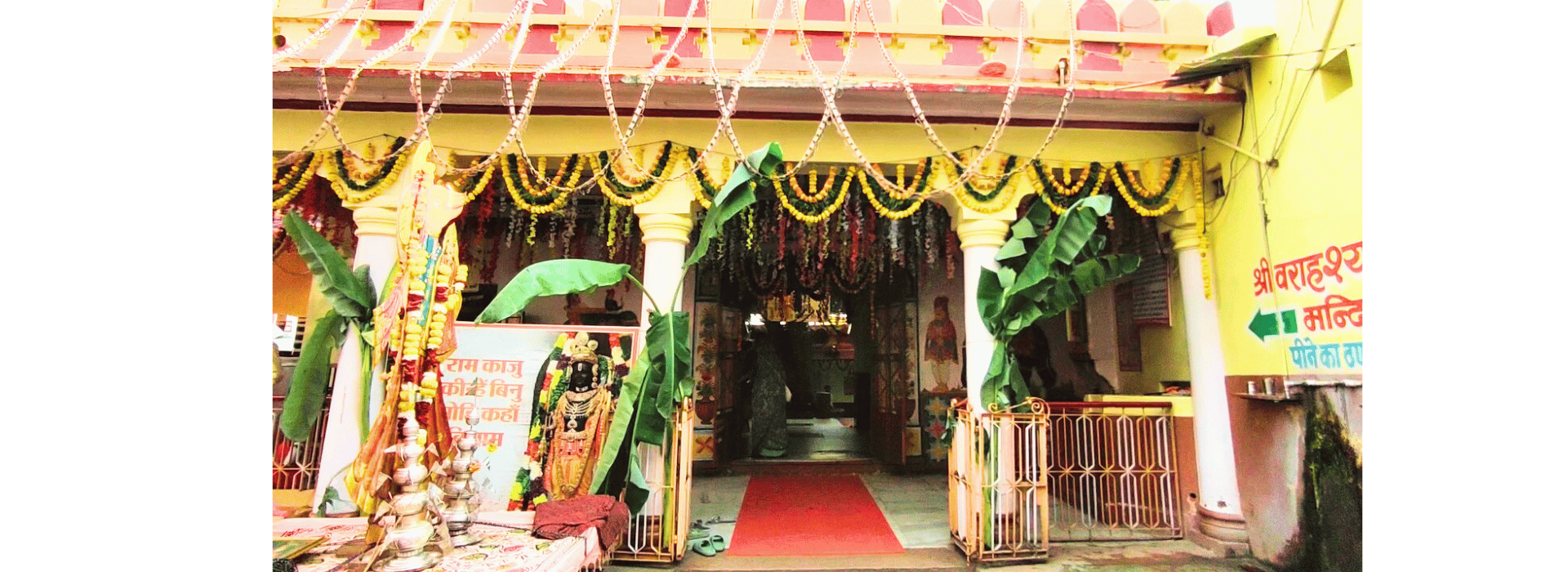
Varahashyam Temple
Varahashyam Temple
The Varahashyam Temple in the sacred city of Shreemal holds profound spiritual significance and is revered by countless devotees. Sage Vashishtha narrates that those who offer prayers at this temple are granted salvation and protection from the torments of the afterlife.
The sacred story begins with Lord Vishnu and Goddess Lakshmi embarking on a pilgrimage to Shreemal. During their journey, Lakshmi curiously asks Vishnu who had lifted the Earth from the depths of the cosmic waters during the great deluge. Lord Vishnu reveals that it was he, in his majestic form as Varaha, the divine boar. In this form, Vishnu was worshipped by the Nagakanyas (serpent maidens) in Patala, the netherworld. His immense and divine body was home to all the Devas, Rishis, and celestial beings like the Ashvinikumars.
In awe of his revelation, Lakshmi requests to witness this form. In response, with the mighty sound of the conch, Vishnu manifests as the towering boar. With four powerful hands, he holds the Shankha (conch), Chakra (discus), Gada (mace), and Padma (lotus), draped in the golden garment of Pitambara (yellow garment). Lakshmi, moved by this divine vision, offers her prayers, and Lord Vishnu proclaims that this form shall be eternally worshipped in Shreemal as Varahashyam.
This divine form is honored at the Varahashyam Temple, especially during the eleventh day of every Paksha and the sacred months of Ashadha and Karthika. Performing yajnas and offering prayers at this temple is said to bring immense spiritual merit and protection. The Varahashyam Temple is one of the rare places on earth where Lord Vishnu’s Varaha avatar is revered, along with a similar image in the Vindhyachal mountains.
Pilgrims are drawn to the temple, inspired by the sacred event and the promise of eternal blessings from both Lord Vishnu and Goddess Lakshmi. The temple remains a spiritual sanctuary, offering devotees a deep connection with the divine.
The Varahashyam Temple in the sacred city of Shreemal holds profound spiritual significance and is revered by countless devotees. Sage Vashishtha narrates that those who offer prayers at this temple are granted salvation and protection from the torments of the afterlife.
The sacred story begins with Lord Vishnu and Goddess Lakshmi embarking on a pilgrimage to Shreemal. During their journey, Lakshmi curiously asks Vishnu who had lifted the Earth from the depths of the cosmic waters during the great deluge. Lord Vishnu reveals that it was he, in his majestic form as Varaha, the divine boar. In this form, Vishnu was worshipped by the Nagakanyas (serpent maidens) in Patala, the netherworld. His immense and divine body was home to all the Devas, Rishis, and celestial beings like the Ashvinikumars.
In awe of his revelation, Lakshmi requests to witness this form. In response, with the mighty sound of the conch, Vishnu manifests as the towering boar. With four powerful hands, he holds the Shankha (conch), Chakra (discus), Gada (mace), and Padma (lotus), draped in the golden garment of Pitambara (yellow garment). Lakshmi, moved by this divine vision, offers her prayers, and Lord Vishnu proclaims that this form shall be eternally worshipped in Shreemal as Varahashyam.
This divine form is honored at the Varahashyam Temple, especially during the eleventh day of every Paksha and the sacred months of Ashadha and Karthika. Performing yajnas and offering prayers at this temple is said to bring immense spiritual merit and protection. The Varahashyam Temple is one of the rare places on earth where Lord Vishnu’s Varaha avatar is revered, along with a similar image in the Vindhyachal mountains.
Pilgrims are drawn to the temple, inspired by the sacred event and the promise of eternal blessings from both Lord Vishnu and Goddess Lakshmi. The temple remains a spiritual sanctuary, offering devotees a deep connection with the divine.
