
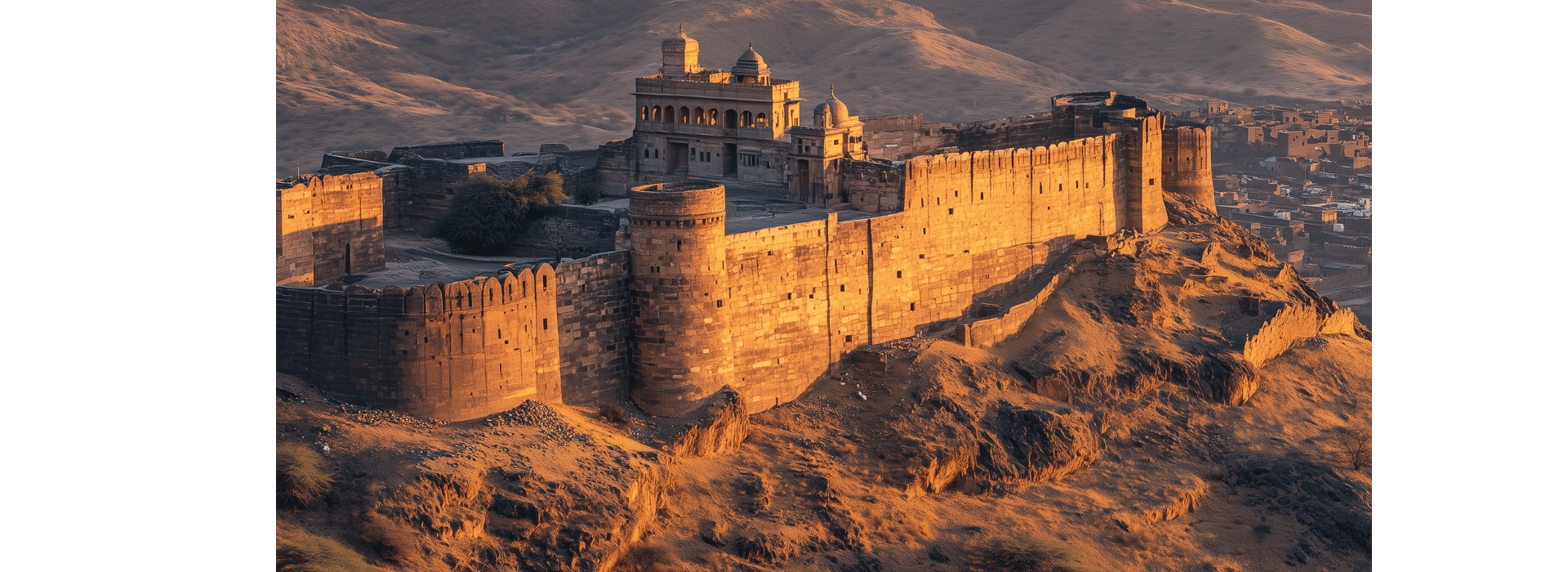
Visual Representation of Sirohi Fort
Sirohi Fort: A Hidden Gem in the Hills of Rajasthan
Nestled amidst the picturesque Sirwana Hills hills of Rajasthan, Sirohi Fort is a lesser-known yet historically significant fortress that encapsulates the grandeur and strategic importance of medieval Rajasthan. Located in the Sirohi district, the fort, along with its associated structures, serves as a symbol of the region’s rich cultural heritage and immense historical significance, the fort has witnessed the rise of monarchs, the crafting of legendary swords, and the spiritual reverence of the local deities. Its story is deeply intertwined with that of the Deora Chauhan dynasty and the broader history of Rajasthan.
A Glimpse into History: From Shivpuri to Sirohi
The origins of Sirohi Fort can be traced back to the early 15th century, built around 1405 by Rao Sobha Ji, a descendant of Rao Deoraj, the founder of the Chauhan Deora clan. Situated on the eastern side of the Sirwana Hills, the fort initially formed part of Khuba town, also known as Shivpuri. This strategic location allowed the rulers to oversee the western landscape while guarding against invasions.
In 1482, Sehastramal, the son of Rao Sobha Ji, founded Sirohi town on the western slope of the hills, giving the region prominence. Under the Deora rulers, the fort became a stronghold and a testament to their valor and skill. The Deoras, a branch of the powerful Chauhan dynasty, are known to have established their rule in the region during the medieval period, and the fort served as their seat of power until the princely state of Sirohi merged with the Indian Union in 1947.
Known for their craftsmanship, particularly their expertise in sword-making, the Deoras became legendary as both warriors and artisans. Sirohi Fort thus serves as a dual symbol of martial prowess and craftsmanship, embodying Rajasthan’s rich heritage and military past.
Architectural Grandeur and Strategic Importance
Sirohi Fort is a prime example of Rajput military architecture, strategically built on a hill to oversee the surrounding plains and trade routes. The steep climb to the fort, combined with its massive bastions and fortified walls, made it nearly impossible for invaders to capture. These defensive measures ensured that the fort could withstand long sieges and offered the rulers a vantage point to protect their kingdom.
The winding paths and narrow entrances were designed to confuse and slow down attacking forces, a hallmark of Rajput architecture. Though much of the fort now lies in ruins, its tall walls and remnants of the once-majestic structures still showcase the grandeur of its past. The fort’s layout included living quarters for the royal family, barracks for soldiers, and temples, making it a self-sustaining fortress capable of hosting a small army.
Sarneshwar Mahadev Temple: A Spiritual Heart
The fort’s spiritual significance is further highlighted by its proximity to the Sarneshwar Mahadev Temple, dedicated to Lord Shiva. This ancient temple, believed to have been established long before the fort, plays an important role in the religious life of the region. According to legend, the Sarneshwar Mahadev Temple gained prominence during the time of Alauddin Khilji, the Sultan of Delhi. In 1297, Khilji invaded Gujarat, targeting Hindu temples and idols. His forces reportedly seized a Shiva Lingam from the Rudra Mahalaya Temple in Sidhpur and brought it back to Sirohi.
It is said that Rajput warriors defended the Shiva Lingam in a battle against Khilji’s forces, securing its safety on Siranwa Hill. The site was named Ksharneshwar by Maharao Vijay Singh, which later morphed into Sarneshwar. The temple remains a popular pilgrimage site, attracting visitors who seek blessings from the deity. Its intricate architecture, including beautifully carved pillars and a large Shivalinga, further enhances its cultural and spiritual significance.
Sirohi Fort’s Role in Regional Conflicts
The Deora Chauhan rulers of Sirohi were known for their resistance against the Mughal Empire and other invading forces. The fort acted as the stronghold where the Rajput rulers could defend themselves against external threats. The hilly terrain provided a natural advantage in battles, allowing the Sirohi rulers to maintain their independence longer than many other states in the region.
Sirohi Fort’s strategic importance was further enhanced by its proximity to the key trade routes of Rajasthan. Controlling these routes allowed the rulers of Sirohi to prosper economically while keeping their enemies at bay. Though the fort eventually fell into decline, it remained a symbol of Rajput resilience and pride, showcasing the fortitude of the Deora rulers.
Sirohi’s Role in Wars and the British Period
Sirohi Fort was not only a royal residence but also the capital of Sirohi State from 1425 AD until 1947. During its early years, the fort faced constant threats from neighboring kingdoms, such as Jodhpur. In the early 19th century, the state was plagued by conflicts, but it managed to maintain its independence for some time.
In 1817, the British Empire extended its influence over the region, and Sirohi was granted autonomy under the Rajputana Agency. The fort, while no longer a site of active defense, continued to serve as a political and cultural hub for the rulers. After India’s independence in 1947, Sirohi State was merged with Bombay State in 1949 before being incorporated into Rajasthan in 1950.
Sirohi Fort Today: A Timeless Legacy
Today, Sirohi Fort stands as a silent sentinel over the Sirwana Hills, a reminder of Rajasthan’s illustrious past. While time has worn away much of its structure, the fort remains a place of deep historical and spiritual importance. Visitors to the fort can explore its ancient ruins, take in the breathtaking views of the Sirohi district, and visit the Sarneshwar Mahadev Temple, which still attracts devotees and pilgrims.
Visitors to Sirohi Fort can not only explore the ancient ruins but also take in the panoramic views of the Sirohi district, offering a glimpse into the rugged beauty of Rajasthan’s landscape. The fort, with its historical, architectural, and spiritual significance, remains a hidden gem, waiting to be discovered by those eager to learn about Rajasthan’s lesser-known treasures.
The fort is more than just a relic of history—it is a symbol of the Deora Chauhan rulers’ courage and the craftsmanship that once thrived in Rajasthan. It offers a unique glimpse into the region’s military and cultural heritage, preserving the legacy of the past for future generations.
Nestled amidst the picturesque Sirwana Hills hills of Rajasthan, Sirohi Fort is a lesser-known yet historically significant fortress that encapsulates the grandeur and strategic importance of medieval Rajasthan. Located in the Sirohi district, the fort, along with its associated structures, serves as a symbol of the region’s rich cultural heritage and immense historical significance, the fort has witnessed the rise of monarchs, the crafting of legendary swords, and the spiritual reverence of the local deities. Its story is deeply intertwined with that of the Deora Chauhan dynasty and the broader history of Rajasthan.
A Glimpse into History: From Shivpuri to Sirohi
The origins of Sirohi Fort can be traced back to the early 15th century, built around 1405 by Rao Sobha Ji, a descendant of Rao Deoraj, the founder of the Chauhan Deora clan. Situated on the eastern side of the Sirwana Hills, the fort initially formed part of Khuba town, also known as Shivpuri. This strategic location allowed the rulers to oversee the western landscape while guarding against invasions.
In 1482, Sehastramal, the son of Rao Sobha Ji, founded Sirohi town on the western slope of the hills, giving the region prominence. Under the Deora rulers, the fort became a stronghold and a testament to their valor and skill. The Deoras, a branch of the powerful Chauhan dynasty, are known to have established their rule in the region during the medieval period, and the fort served as their seat of power until the princely state of Sirohi merged with the Indian Union in 1947.
Known for their craftsmanship, particularly their expertise in sword-making, the Deoras became legendary as both warriors and artisans. Sirohi Fort thus serves as a dual symbol of martial prowess and craftsmanship, embodying Rajasthan’s rich heritage and military past.
Architectural Grandeur and Strategic Importance
Sirohi Fort is a prime example of Rajput military architecture, strategically built on a hill to oversee the surrounding plains and trade routes. The steep climb to the fort, combined with its massive bastions and fortified walls, made it nearly impossible for invaders to capture. These defensive measures ensured that the fort could withstand long sieges and offered the rulers a vantage point to protect their kingdom.
The winding paths and narrow entrances were designed to confuse and slow down attacking forces, a hallmark of Rajput architecture. Though much of the fort now lies in ruins, its tall walls and remnants of the once-majestic structures still showcase the grandeur of its past. The fort’s layout included living quarters for the royal family, barracks for soldiers, and temples, making it a self-sustaining fortress capable of hosting a small army.
Sarneshwar Mahadev Temple: A Spiritual Heart
The fort’s spiritual significance is further highlighted by its proximity to the Sarneshwar Mahadev Temple, dedicated to Lord Shiva. This ancient temple, believed to have been established long before the fort, plays an important role in the religious life of the region. According to legend, the Sarneshwar Mahadev Temple gained prominence during the time of Alauddin Khilji, the Sultan of Delhi. In 1297, Khilji invaded Gujarat, targeting Hindu temples and idols. His forces reportedly seized a Shiva Lingam from the Rudra Mahalaya Temple in Sidhpur and brought it back to Sirohi.
It is said that Rajput warriors defended the Shiva Lingam in a battle against Khilji’s forces, securing its safety on Siranwa Hill. The site was named Ksharneshwar by Maharao Vijay Singh, which later morphed into Sarneshwar. The temple remains a popular pilgrimage site, attracting visitors who seek blessings from the deity. Its intricate architecture, including beautifully carved pillars and a large Shivalinga, further enhances its cultural and spiritual significance.
Sirohi Fort’s Role in Regional Conflicts
The Deora Chauhan rulers of Sirohi were known for their resistance against the Mughal Empire and other invading forces. The fort acted as the stronghold where the Rajput rulers could defend themselves against external threats. The hilly terrain provided a natural advantage in battles, allowing the Sirohi rulers to maintain their independence longer than many other states in the region.
Sirohi Fort’s strategic importance was further enhanced by its proximity to the key trade routes of Rajasthan. Controlling these routes allowed the rulers of Sirohi to prosper economically while keeping their enemies at bay. Though the fort eventually fell into decline, it remained a symbol of Rajput resilience and pride, showcasing the fortitude of the Deora rulers.
Sirohi’s Role in Wars and the British Period
Sirohi Fort was not only a royal residence but also the capital of Sirohi State from 1425 AD until 1947. During its early years, the fort faced constant threats from neighboring kingdoms, such as Jodhpur. In the early 19th century, the state was plagued by conflicts, but it managed to maintain its independence for some time.
In 1817, the British Empire extended its influence over the region, and Sirohi was granted autonomy under the Rajputana Agency. The fort, while no longer a site of active defense, continued to serve as a political and cultural hub for the rulers. After India’s independence in 1947, Sirohi State was merged with Bombay State in 1949 before being incorporated into Rajasthan in 1950.
Sirohi Fort Today: A Timeless Legacy
Today, Sirohi Fort stands as a silent sentinel over the Sirwana Hills, a reminder of Rajasthan’s illustrious past. While time has worn away much of its structure, the fort remains a place of deep historical and spiritual importance. Visitors to the fort can explore its ancient ruins, take in the breathtaking views of the Sirohi district, and visit the Sarneshwar Mahadev Temple, which still attracts devotees and pilgrims.
Visitors to Sirohi Fort can not only explore the ancient ruins but also take in the panoramic views of the Sirohi district, offering a glimpse into the rugged beauty of Rajasthan’s landscape. The fort, with its historical, architectural, and spiritual significance, remains a hidden gem, waiting to be discovered by those eager to learn about Rajasthan’s lesser-known treasures.
The fort is more than just a relic of history—it is a symbol of the Deora Chauhan rulers’ courage and the craftsmanship that once thrived in Rajasthan. It offers a unique glimpse into the region’s military and cultural heritage, preserving the legacy of the past for future generations.
